
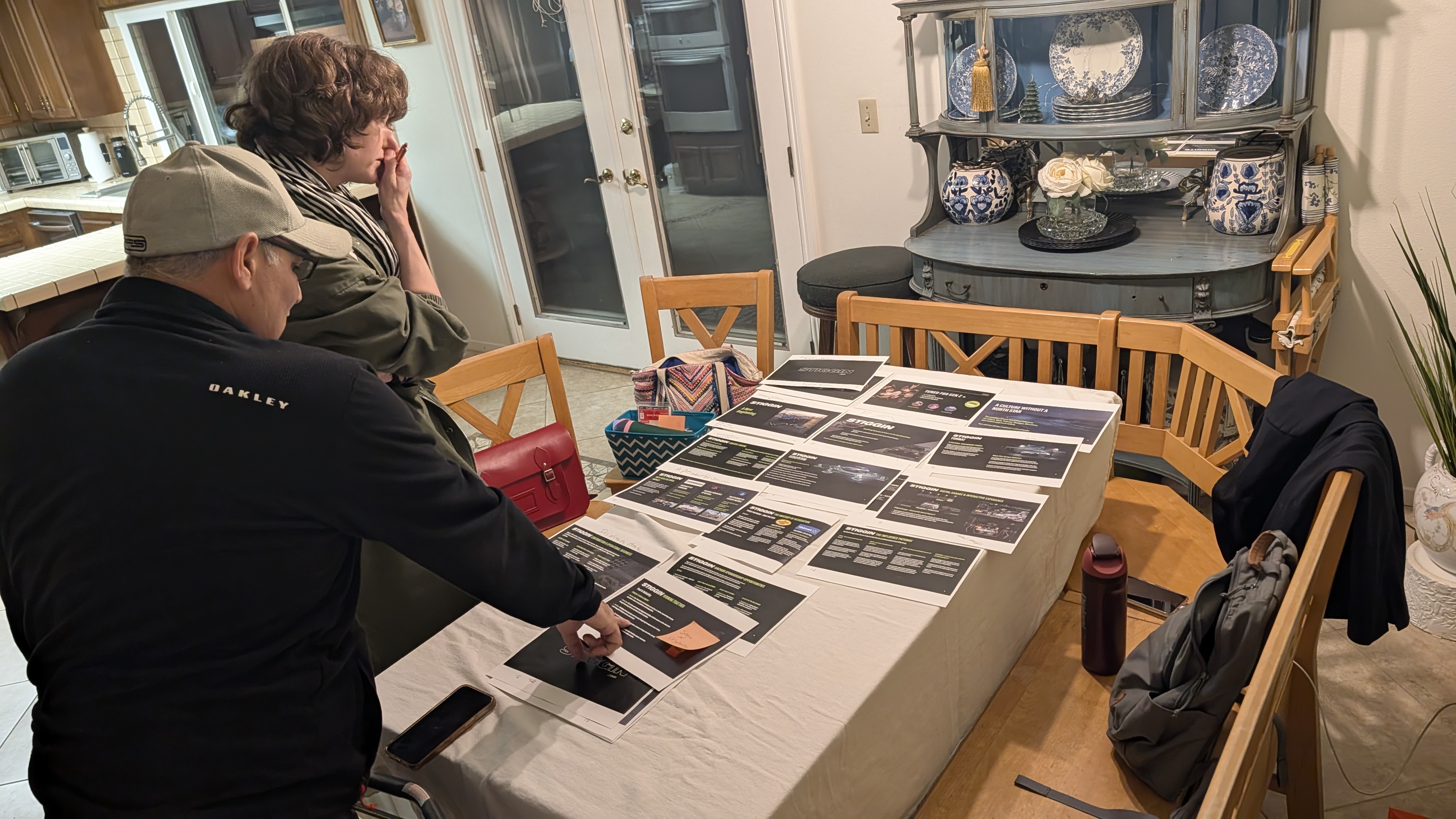
HeyZensei, led by Cole and AJ Patterson were the critical missing element that helped take our ideas and pitch deck to an entirely new level. Through their collaborative brainstorming sessions, Cole and AJ were able extract our ideas, put them on paper, then created one of the most compelling and visually impressive pitch decks I have seen in my 30 year career. They were a pleasure to work with and their creative experience and direction is second to none.
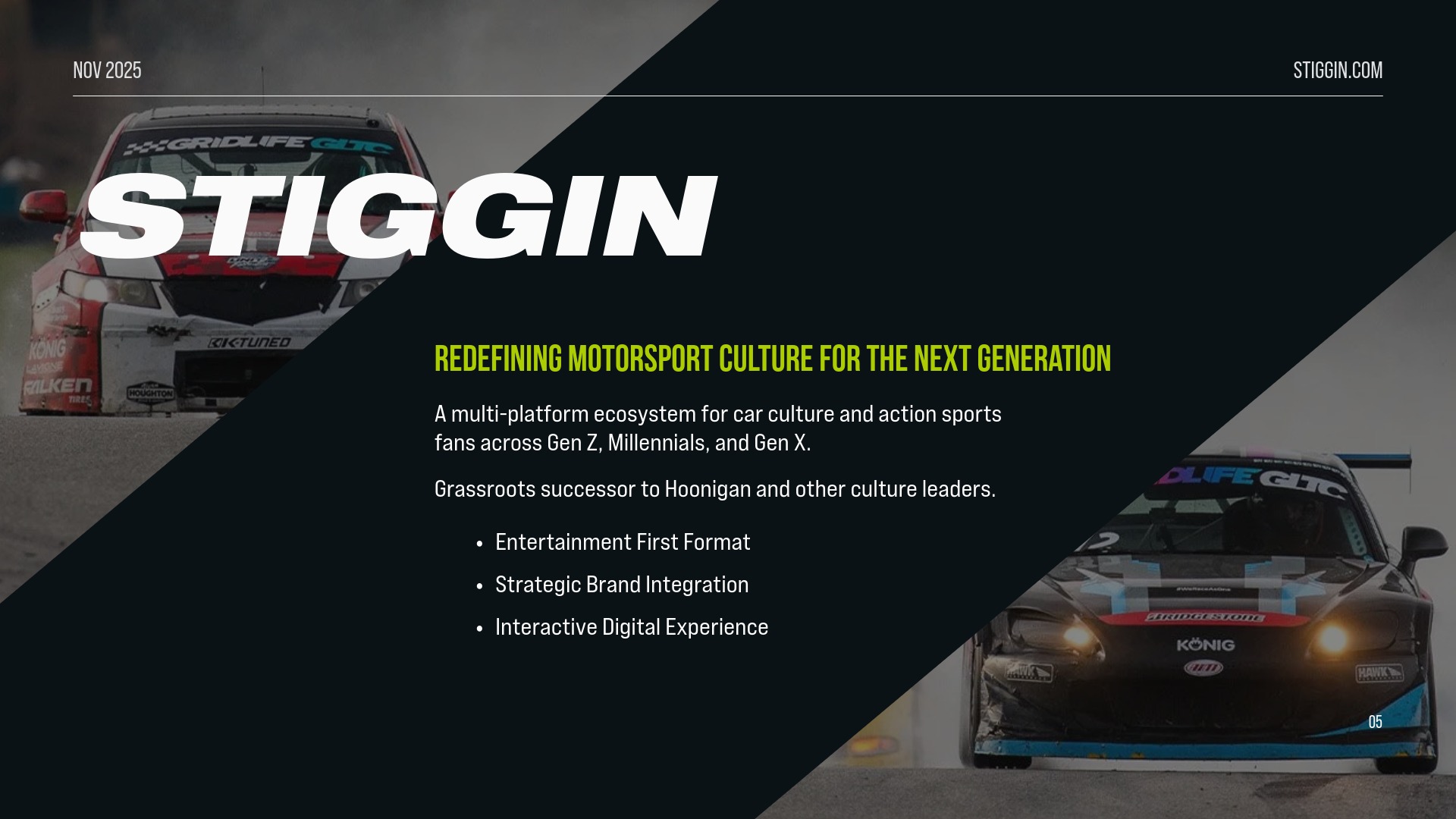
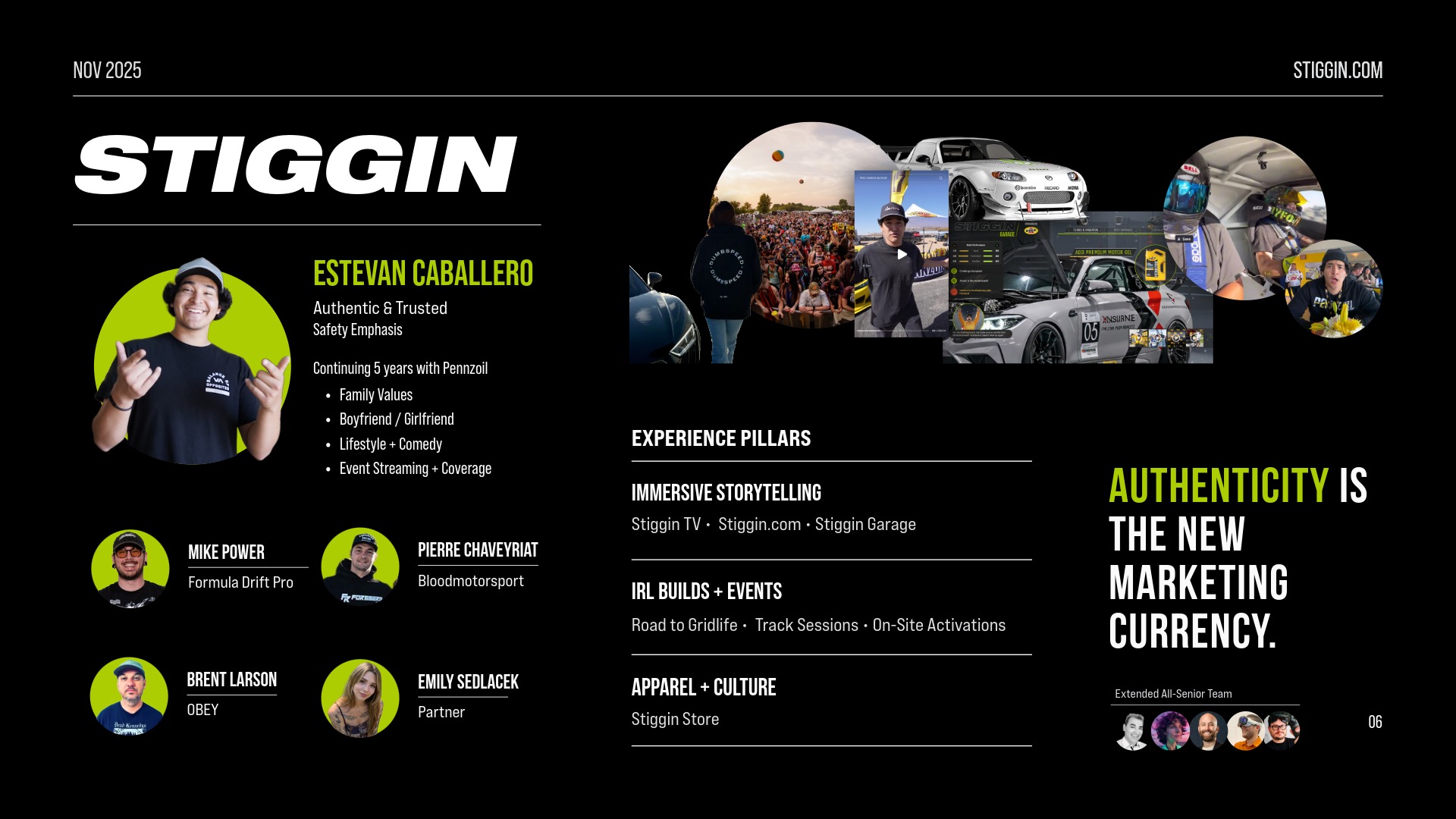
Stiggin had a growing audience, real cultural momentum, and a founder people wanted to follow. It also had a problem that a lot of influencer-led businesses run into: too much dependence on platforms they do not control.
That is what brought ecommerce into the conversation in the first place. The client wanted a more reliable source of revenue and less dependence on social platforms alone. Reasonable instinct. But once heyZensei cracked open the surface need, it became clear the opportunity was much bigger than merch. The real play was a broader ecosystem — one built to create more sponsor value, more fan participation, more staying power, and a much stronger business underneath the audience.
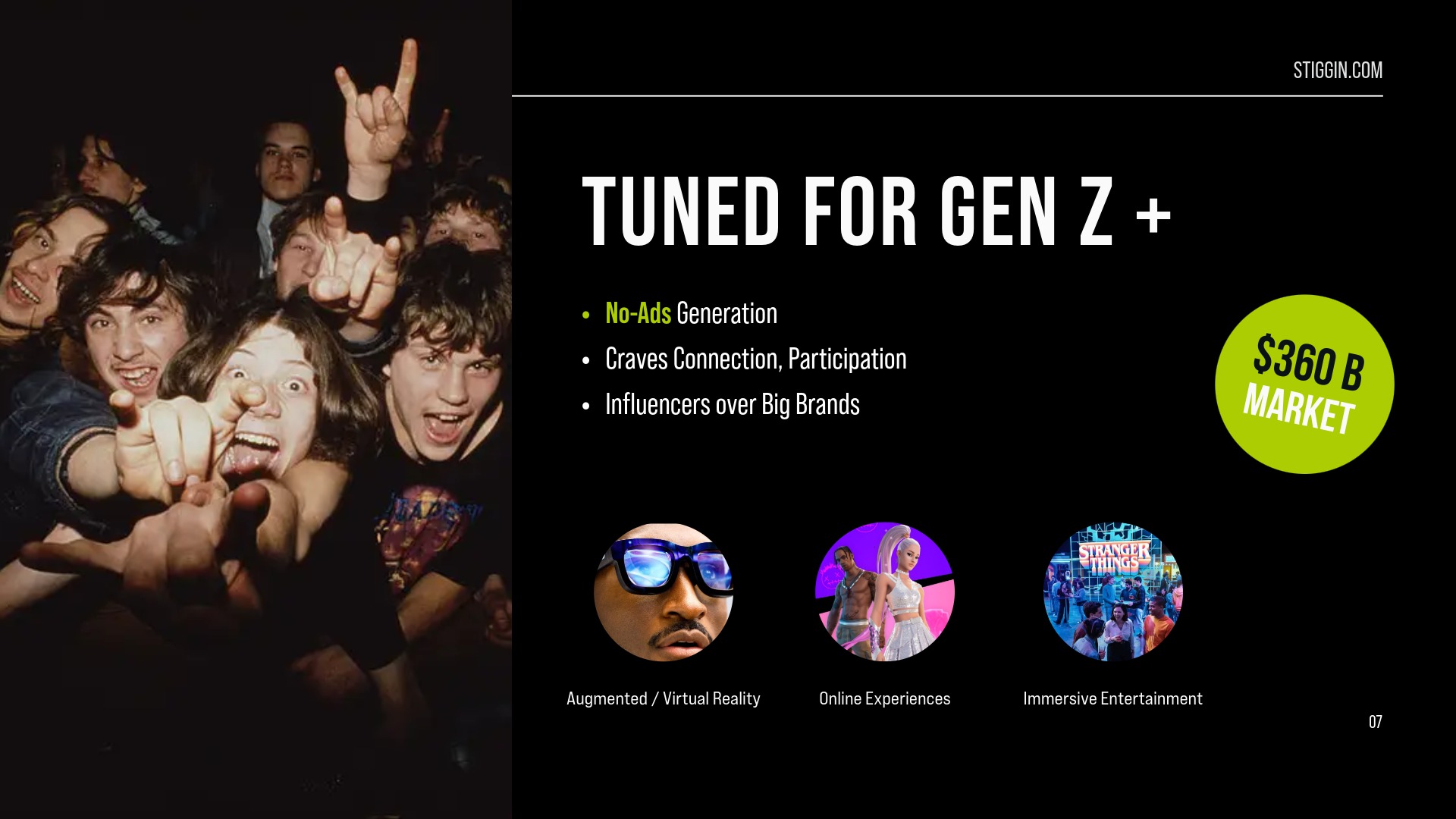
At the start, Stiggin was leaning heavily on social presence and platform attention. That can work for a while, but it is also fragile: algorithms change, platforms go down, content gets flagged, and the business ends up living on rented land. For a creator brand with real momentum, that is a shaky foundation.
The original idea centered on ecommerce. But the deeper issue was not “how do we sell more stuff?” It was “how do we build a business model that can outlast the feed?” Stiggin needed a more durable system for audience engagement, sponsor integration, and revenue generation — one that did not depend on a single platform or a single side stream of income.
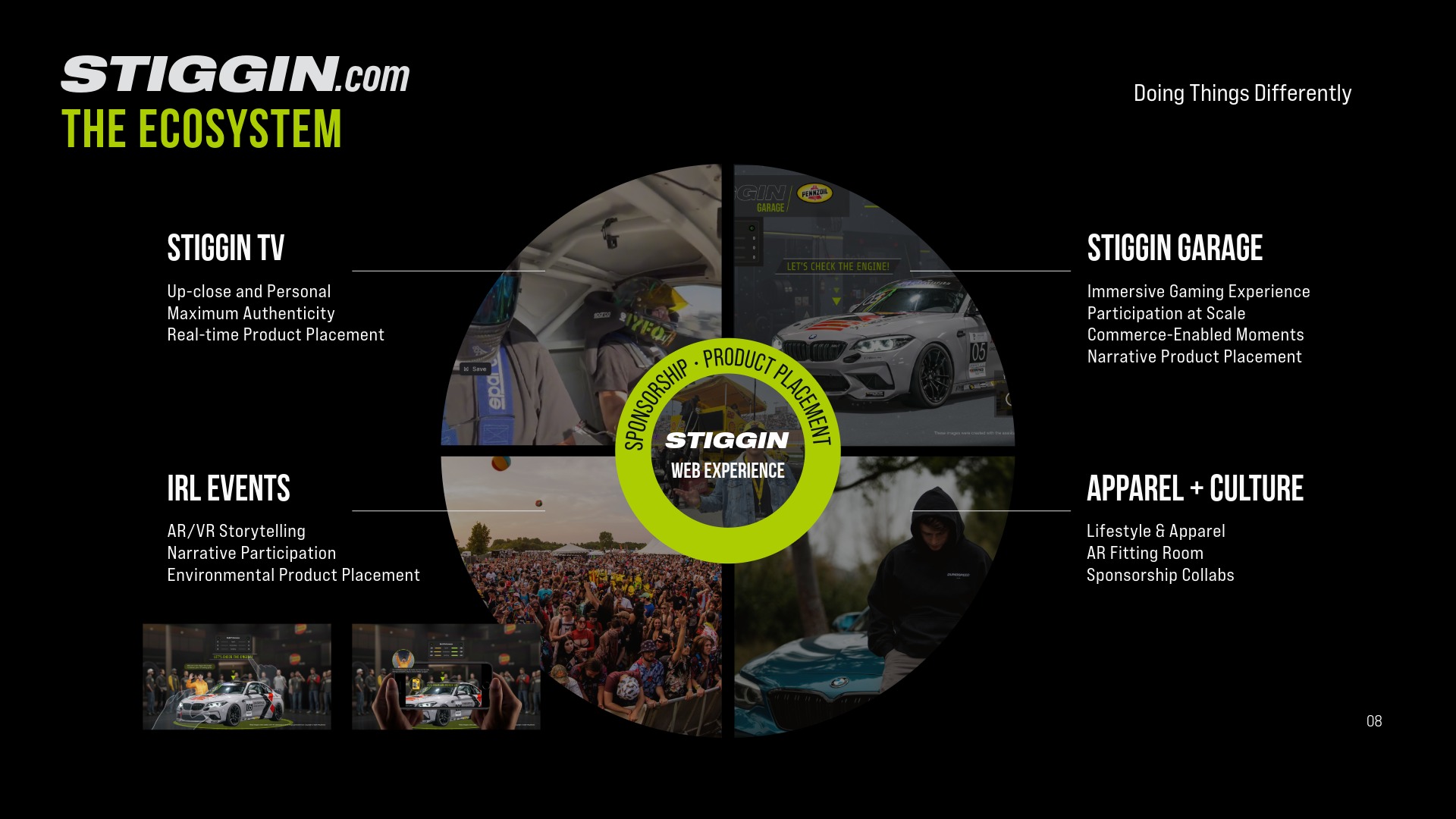
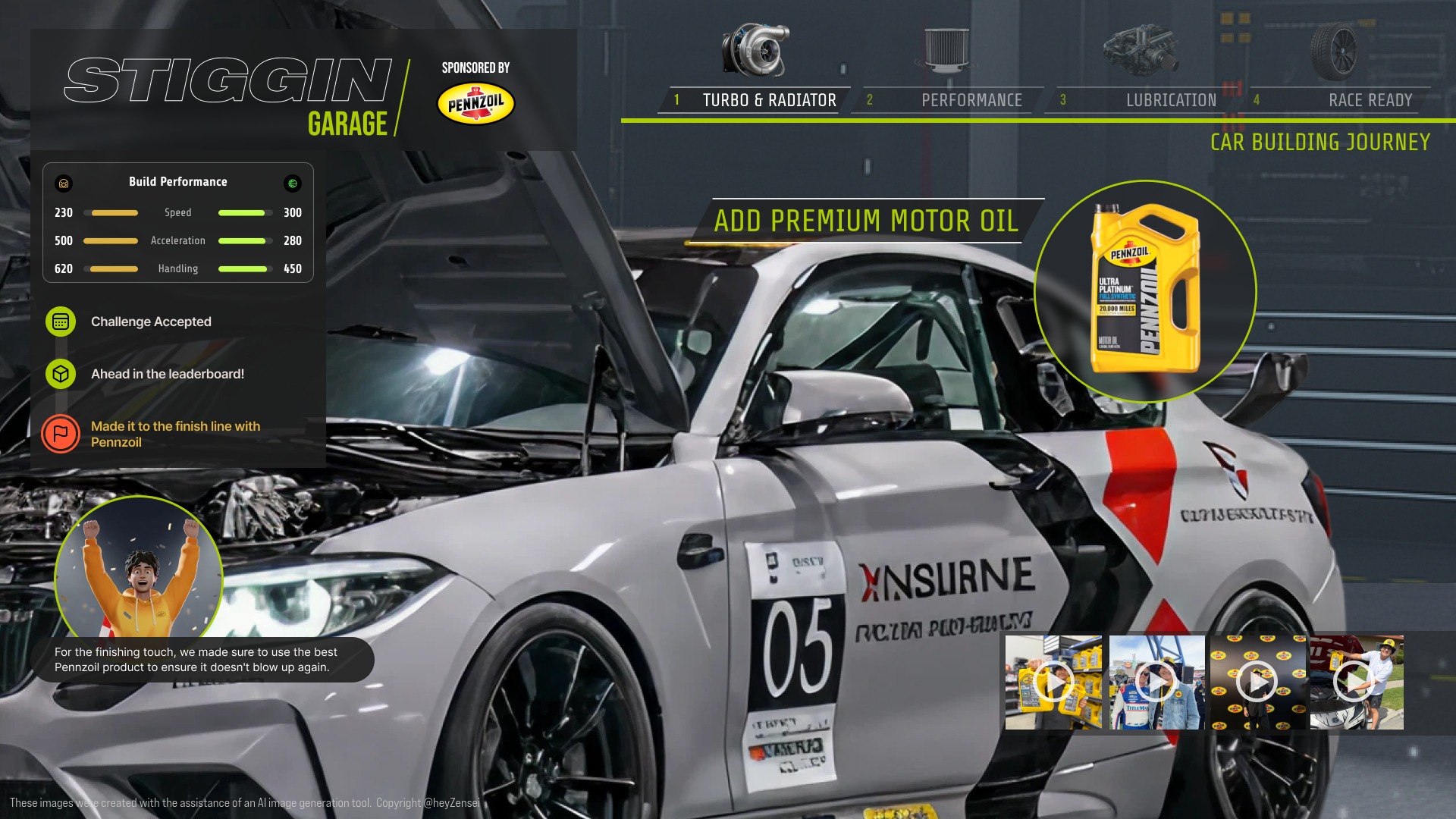
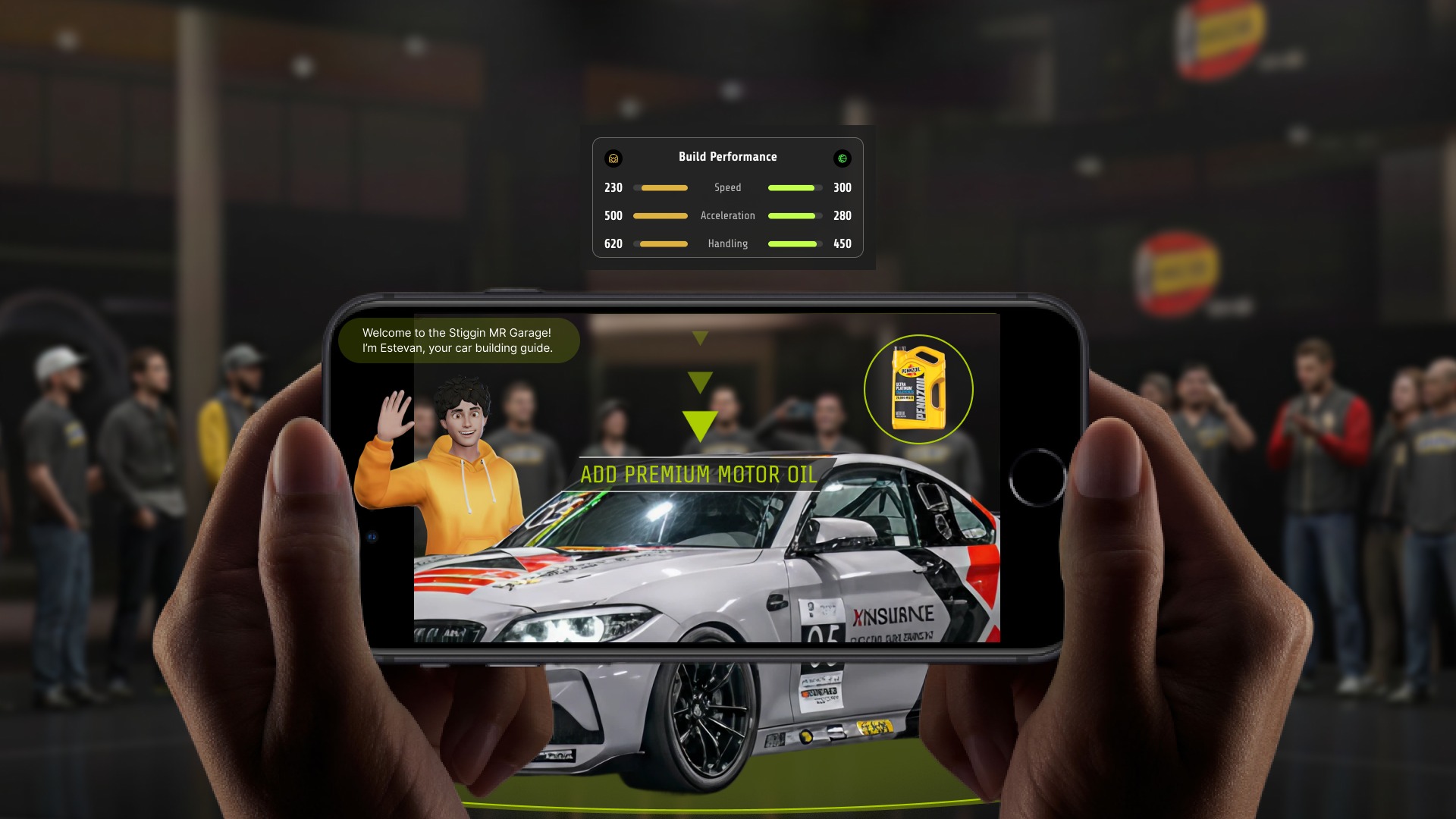
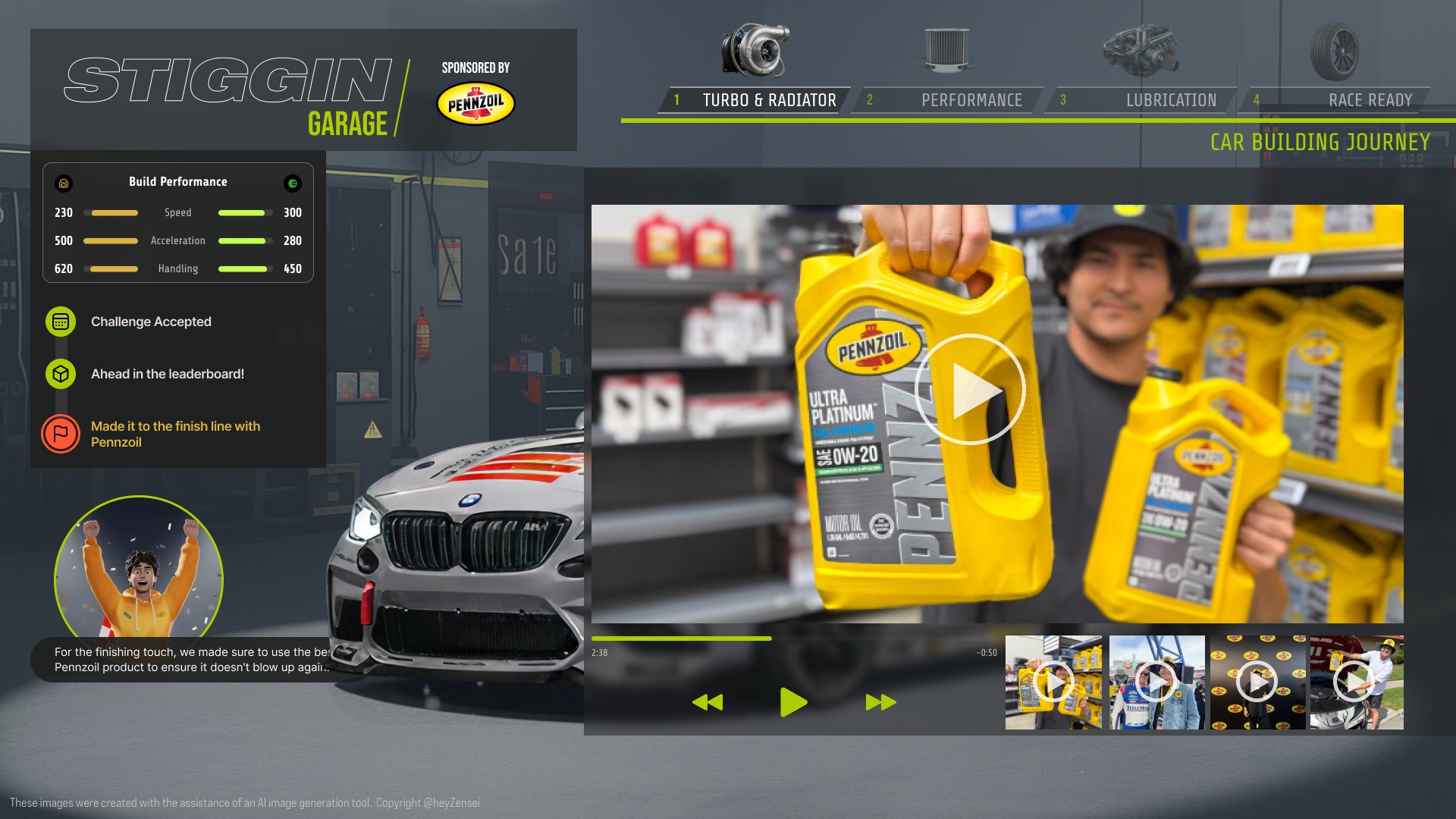
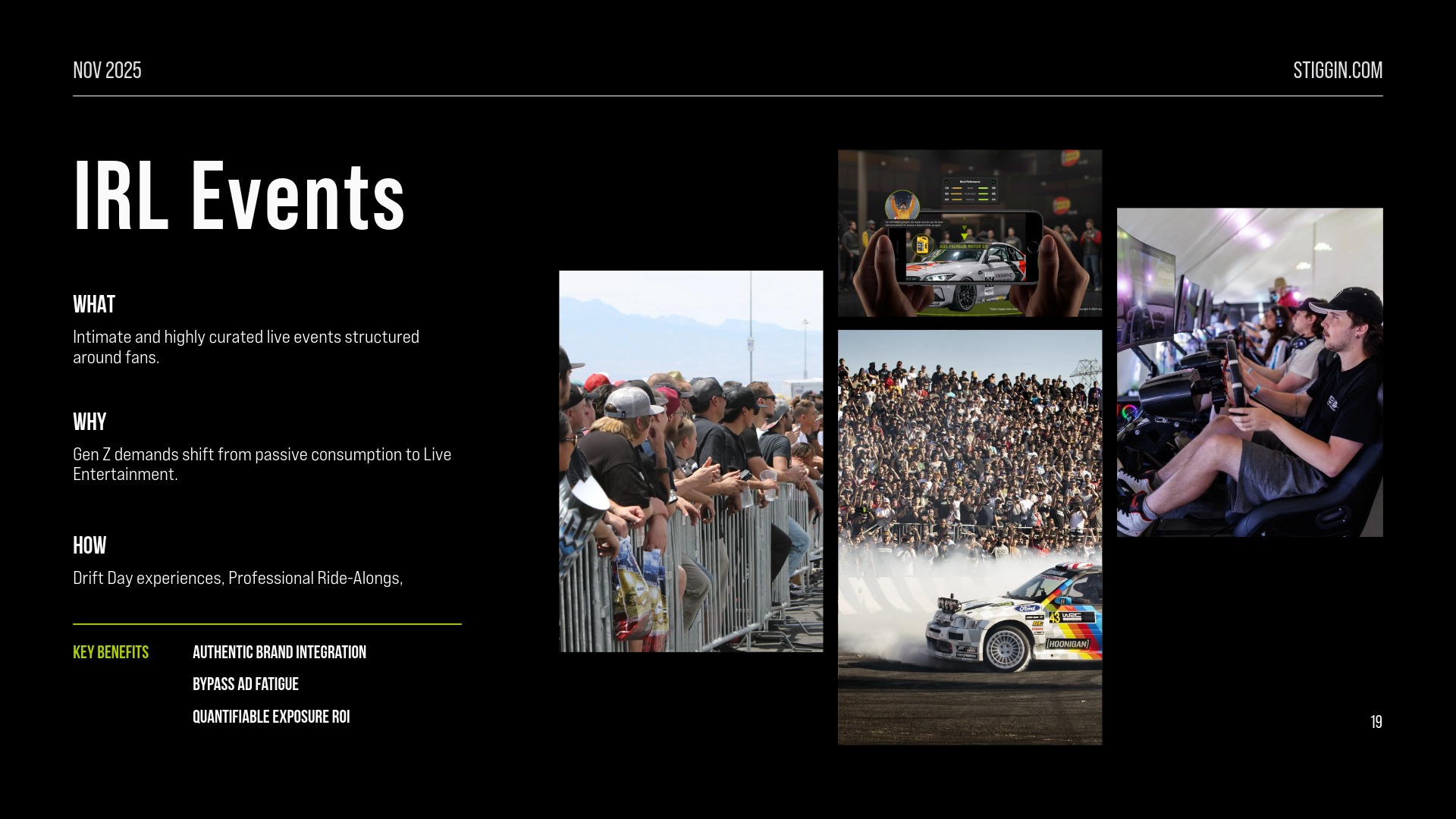
That shift opened up a much bigger path. Instead of one narrow add-on, Stiggin gained five meaningful channels for growth, monetization, and sponsor buy-in: Stiggin TV reality series, online fan experience, the virtual garage, IRL events, and apparel + culture. Together, they turned a vulnerable influencer business into a much more compelling ecosystem.

.png)
The biggest shift was not just that the idea got bigger. It got sharper, more credible, and a whole lot harder to ignore.
Stiggin moved from a social-led presence with a merch-first instinct to a much broader business concept with multiple channels for sponsor value, audience participation, and revenue generation. The ecosystem created room for immersive storytelling, interactive fan experiences, live events, commerce-enabled content, and culture-driven apparel — all tied together by one clearer business idea.
That mattered because sponsors were no longer being asked to fund a personality and hope for the best. They were being shown a system — one that could support real-time product placement, environmental brand integration, interactive commerce, AR/VR storytelling, and high-margin retail moments across multiple audience touchpoints. That is a much stronger conversation.
The momentum behind it is real too. The ecommerce side of the ecosystem is now launch-ready for Summer 2026, which shows the work did not stop at the concept stage. It is moving into execution. And that matters, because sponsorships land differently when the channels are not just pitched — they are actively being built out.
If there’s a bigger opportunity hiding under the surface, we’ll help you find it.
.avif)
.jpeg)